
Bio
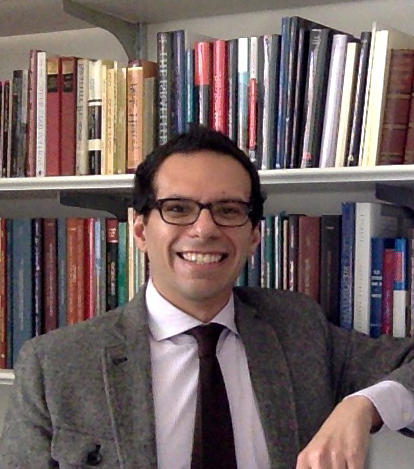
Gabriel H. Pizzorno is Senior Lecturer on History at Harvard University, where he directs the Program in Digital History and serves as faculty chair of the Digital Scholarship Group, coordinating digital pedagogy and research infrastructure across the Faculty of Arts and Sciences.
His research develops computational methods for turning heterogeneous, unstructured historical sources into structured, machine-actionable data, and applies them to the study of material culture and of lives poorly represented in conventional historical narratives. The work spans machine learning, natural language processing, computer vision, knowledge representation, and network analysis. Its methodological core is the argument that documentary descriptions encode classificatory systems whose grammars can be recovered from data and mapped onto shared schemas, rendering otherwise incomparable datasets interoperable.
He is co-principal investigator of the Documentary Archaeology of Late Medieval Europe (DALME), with Daniel Lord Smail, a project that extracts material-culture data from medieval documentary sources and publishes it as open, machine-actionable datasets. Pizzorno designed and built the platform, which received the Medieval Academy of America's Digital Humanities and Multimedia Prize in 2022.
His recent methodological work addresses retrieval-augmented generation architectures that maintain complete provenance for machine-generated claims, human-in-the-loop procedures for training models on corpora too specialized for existing resources, and community detection in temporal knowledge graphs.
Pizzorno is a co-editor of Objects of Atrocity: Material Culture and the Challenges of Difficult Histories (Purdue University Press, 2026) and is completing a monograph on Dinkha Tepe, an archaeological site in northwestern Iran, which reconstructs the long-term history of the site from the second millennium BCE to the present.
A multiple recipient of Harvard's Excellence in Teaching Award and Certificate of Teaching Excellence, he designed the Certificate Program in Digital Scholarship and teaches its foundational workshops. He has supervised student research across history, applied mathematics, computer science, and economics. Before joining Harvard he was a Research Associate at the University of Pennsylvania Museum of Archaeology and Anthropology and director of its Digital Media Lab, where he led the digitization and online publication of the archives of several long-running archaeological projects. He received his PhD in Art and Archaeology of the Mediterranean World from the University of Pennsylvania.